Kimchi Jjigae
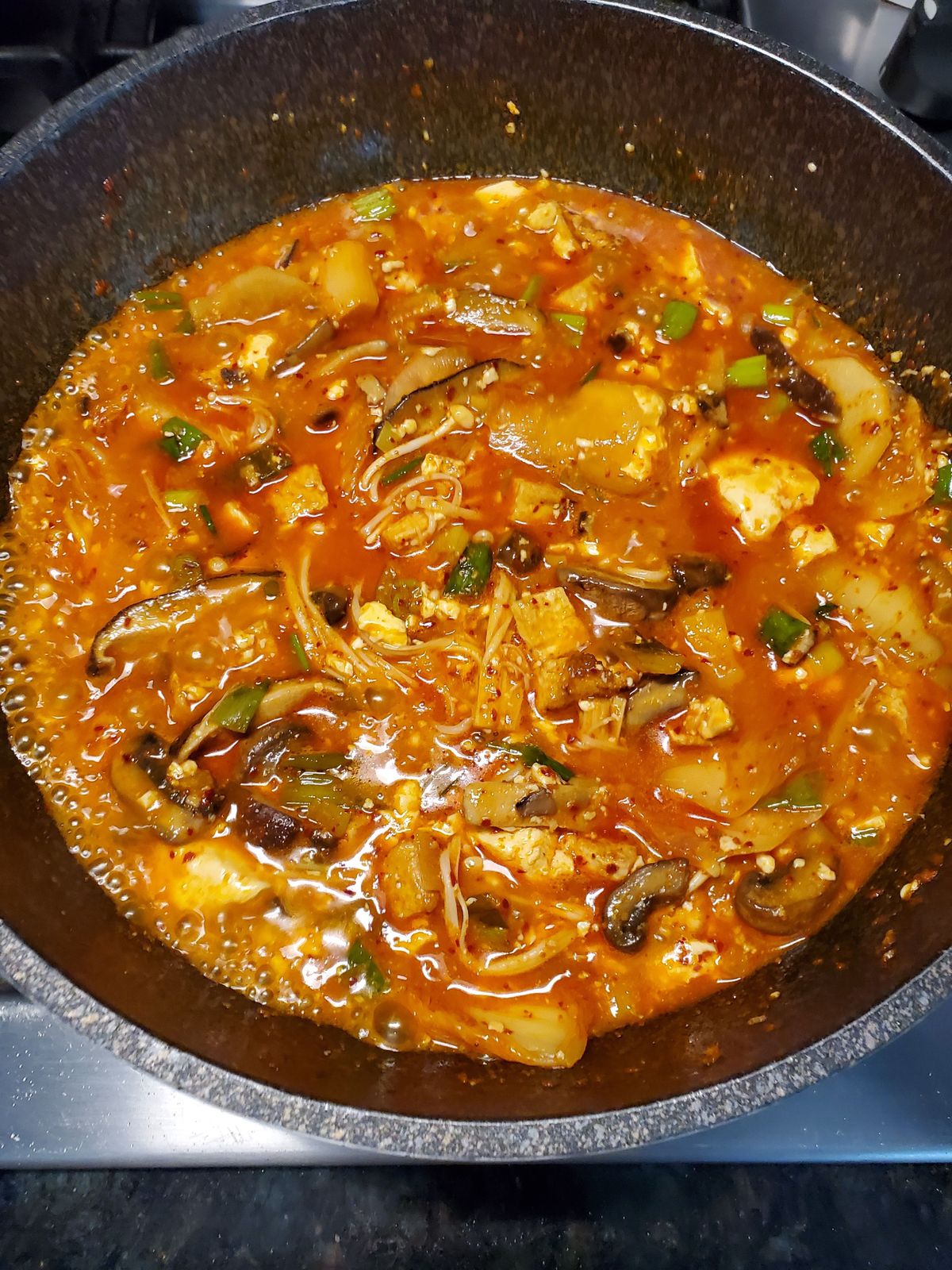
Here's another food post. It's a natural follow-up from my kimchi post. This was perhaps my most successful ever first attempt at making a food that I'd enjoyed when eating out. This is the Korean dish kimchi jjigae.
Once again, I tackled this dish using a template-based approach. First, I searched for a few different recipes online. This is the type of traditional dish that every Korean family might eat on a regular basis. Therefore, every recipe one might find is slightly different. By reading several different recipes in advance, I can get a sense of what are the fundamentals of the dish. Then I can come up with my own recipe using ingredients I have in stock.
For example, my family is vegetarian so I can't include any seafood or meat ingredients. A typical jjigae might include pork belly, shrimp, fish sauce, or anchovy paste. Obviously, I couldn't use these. I did find some vegetarian recipes that used mushrooms (oyster, enoki) and konbu seaweed to achieve a rich umami flavor. So I took this as inspiration and made a jjigae with 2 kinds of tofu and 3 kinds of mushrooms.
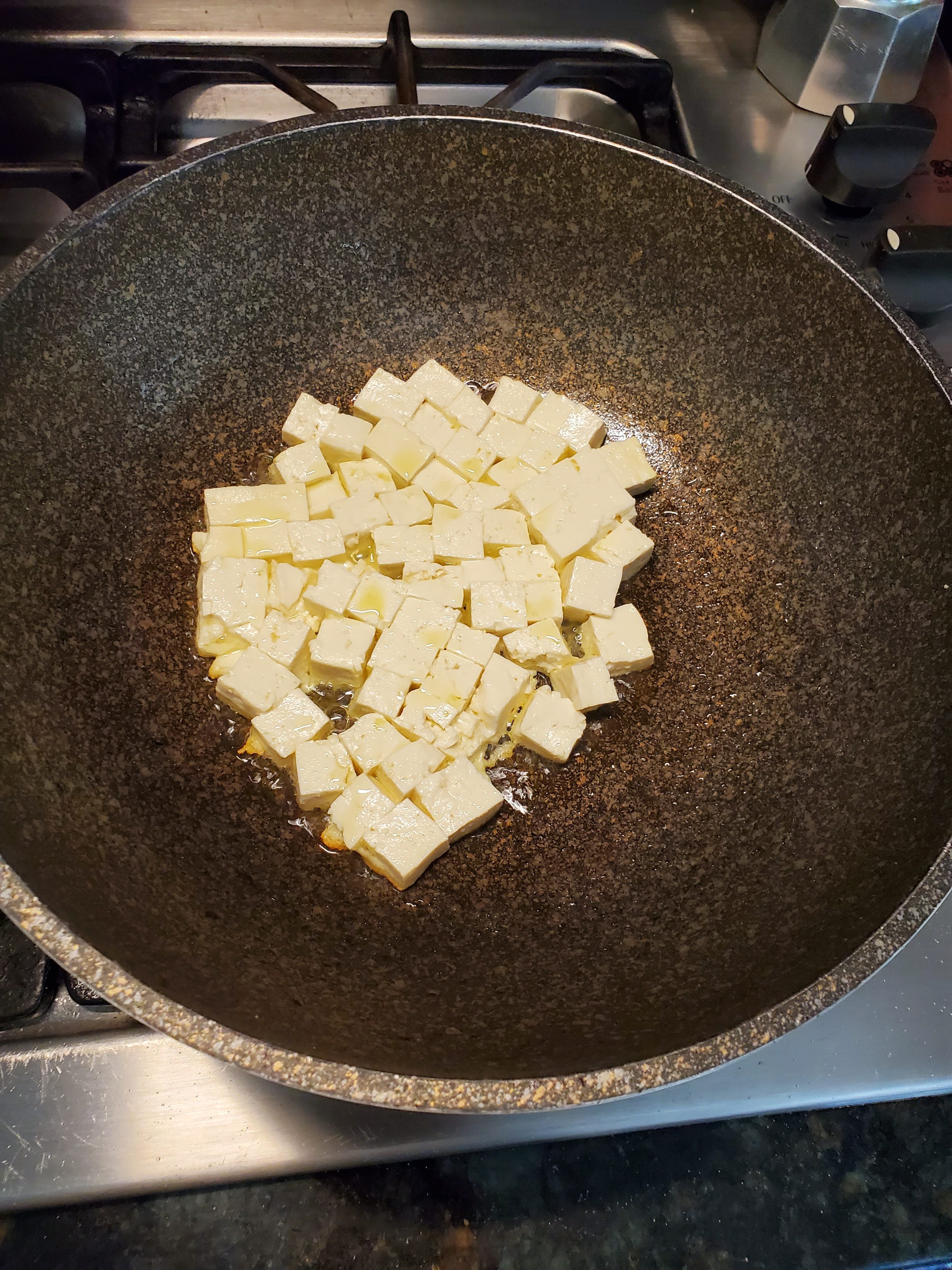
First, fry up some firm tofu in neutral oil. I used a Korean brand that came in a smaller package than the tofu I typically use for stir fry.
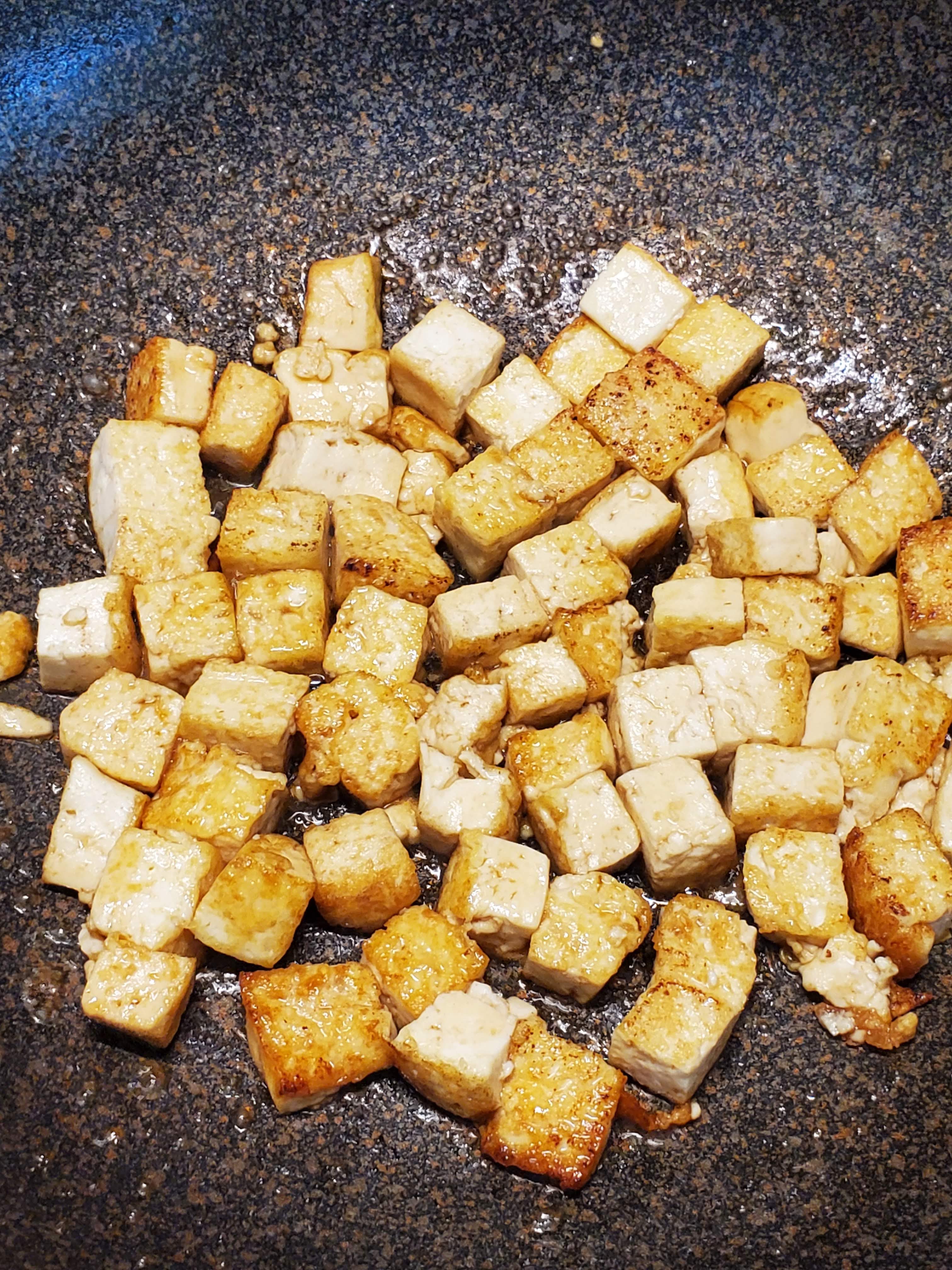
Brown to crispy on at least 2 sides of each cube. Season with soy sauce. While this is certainly no pork belly, it's good enough for the purpose of this dish.
Jjigae with tofu might come in two varieties: dubu jjigae (firm tofu) and soon dubu jjigae (soft tofu). I'm more familiar with the latter variety due to the restaurant chain BCD Tofu House. The name BCD probably comes from the Korean chain Buk Chang Dong.
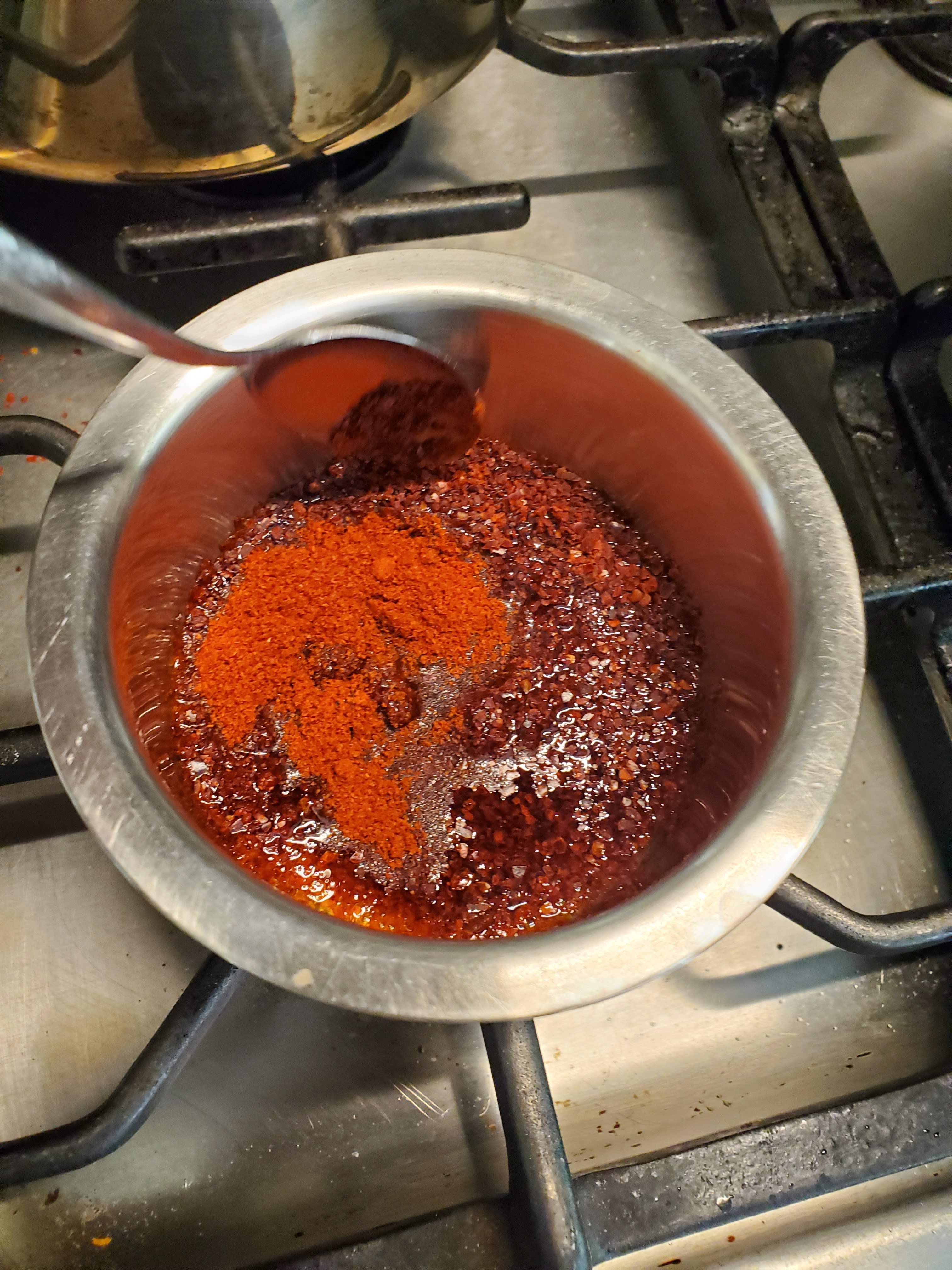
Making red pepper paste is an important step. It's simple, and to get the full effect it's a good idea to make this while the tofu is cooking. Take some sesame oil and warm it over a low flame. Dump in a bunch of gochugaru and mix well. The pepper flavor and color will diffuse into the oil. The reason you want a low flame is so that neither the pepper flakes nor the oil burns. I like jjigae spicy! I love Korean food because it usually has more heat than Japanese or Chinese food. This is an optional addition, but I threw in some red chili powder to make it spicier.
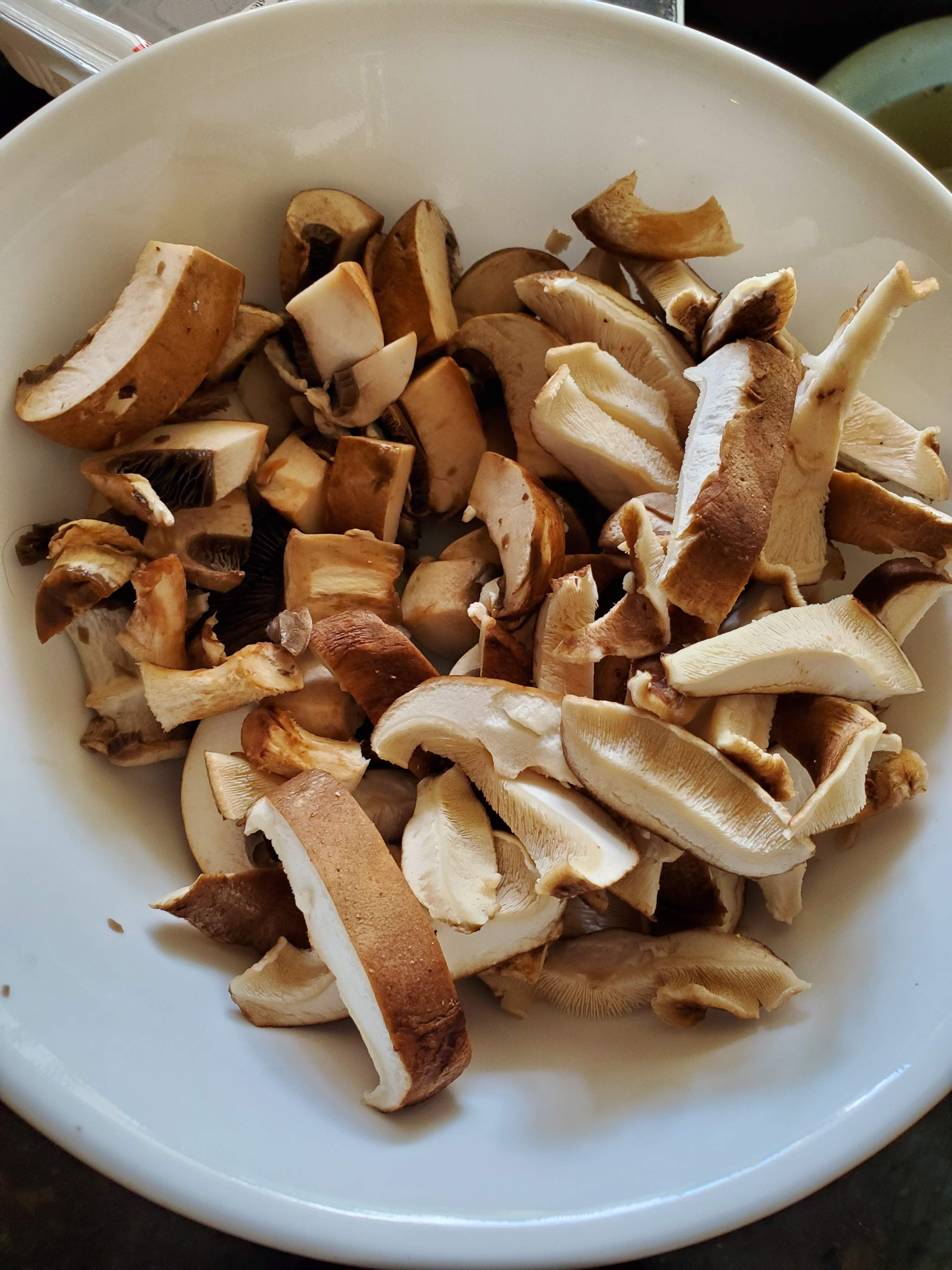
Now for mushrooms. Here, I used two varieties: shiitake and button. Between the two, I prefer shiitakes. They can be pricey, which is one reason I obtained a shiitake grow kit. I mainly used the button mushies because I had a bunch and wanted a little more volume. While not as tasty as shiitakes, they bulk up the mushroom goodness.
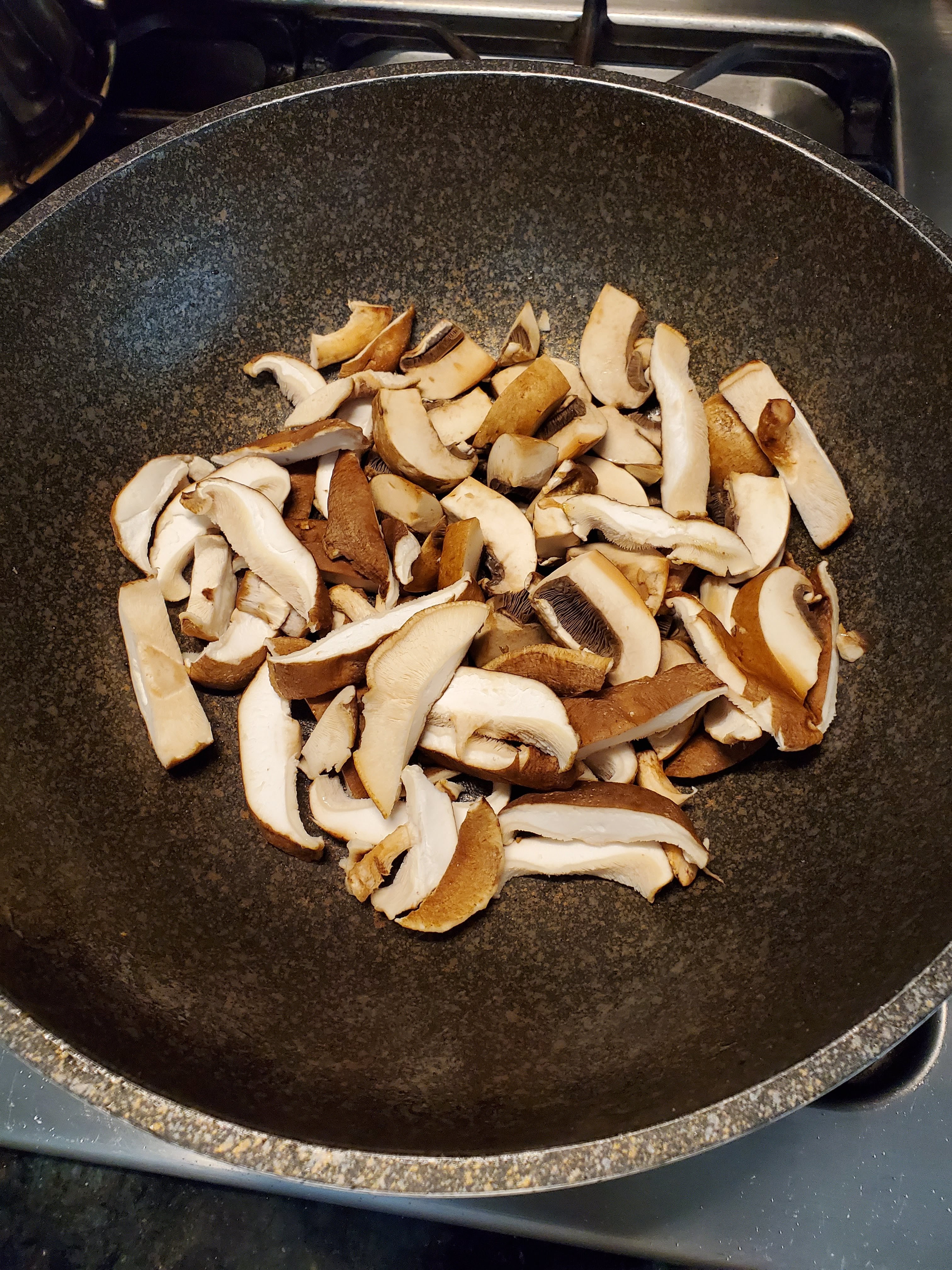
The nice thing about mushrooms is you can't really overcook them. I like to use them right after a soy sauce fry because they can absorb any residual oil and seasoning. A little bit of water helps to keep them from sticking to the bottom of the pan. By the time that water evaporates, along with any moisture that came out of the mushrooms, they're soft and delectable. Another dash of soy sauce here won't hurt.
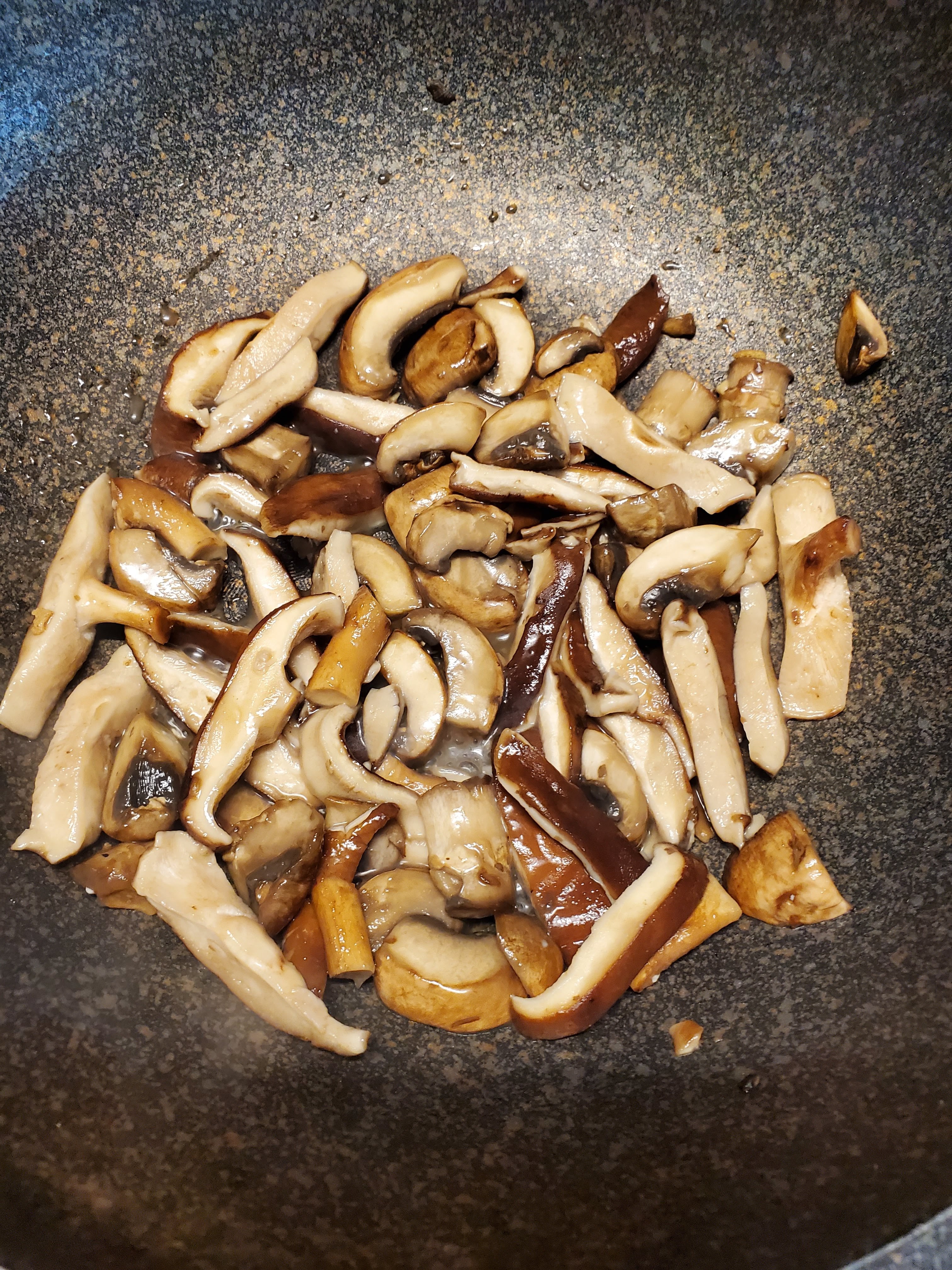
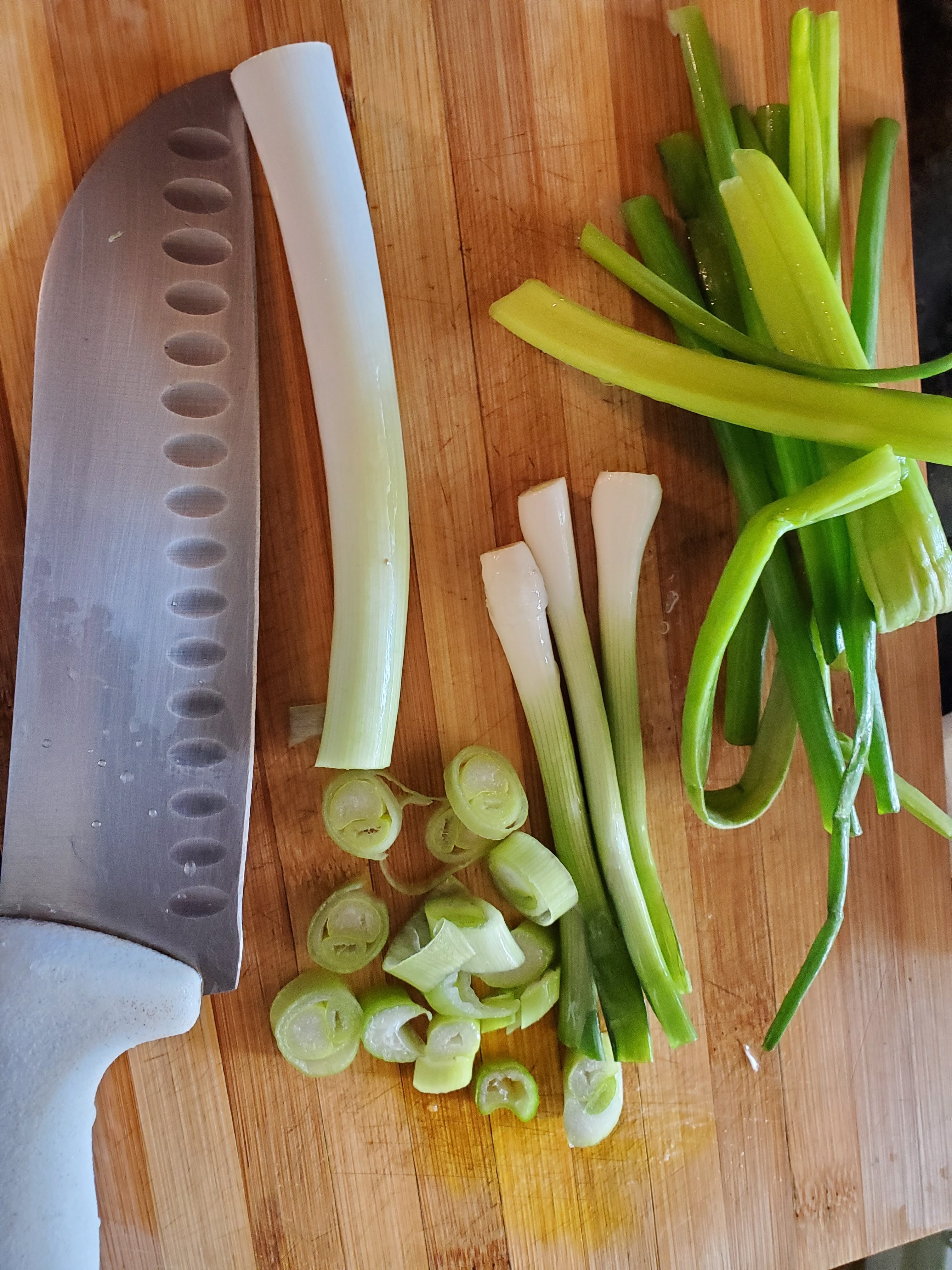
While that's going, I chop some scallions. I save the green part for later and cut up the white part to throw into the wok with the mushrooms.
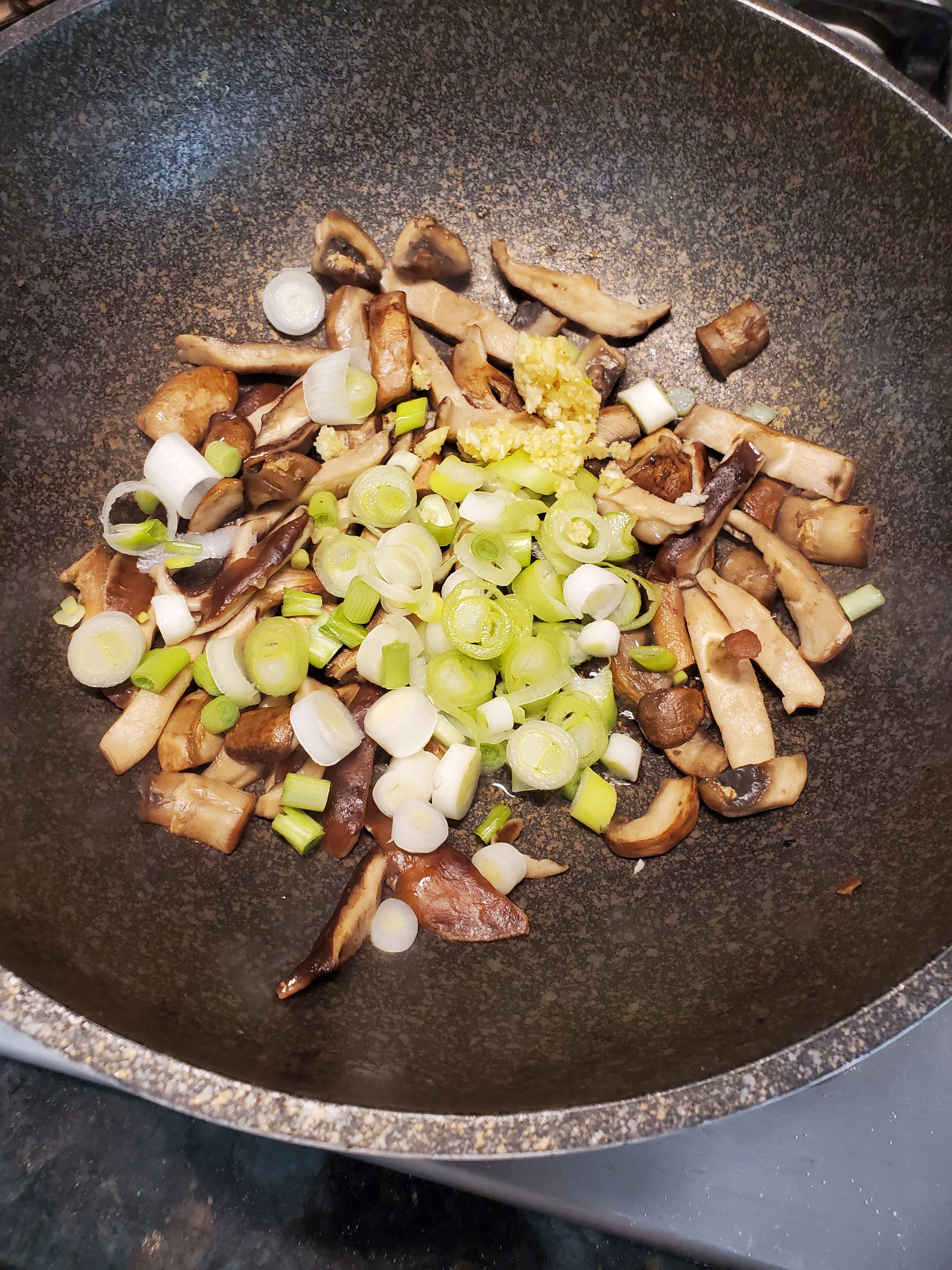
Notice I added some minced garlic along with the onions. Then I added some oil to really stir fry the mushrooms, onion, and garlic together. Once the onions soften and the garlic browns, I lower the heat and toss in the fried tofu and some thinly sliced fresh daikon radish.
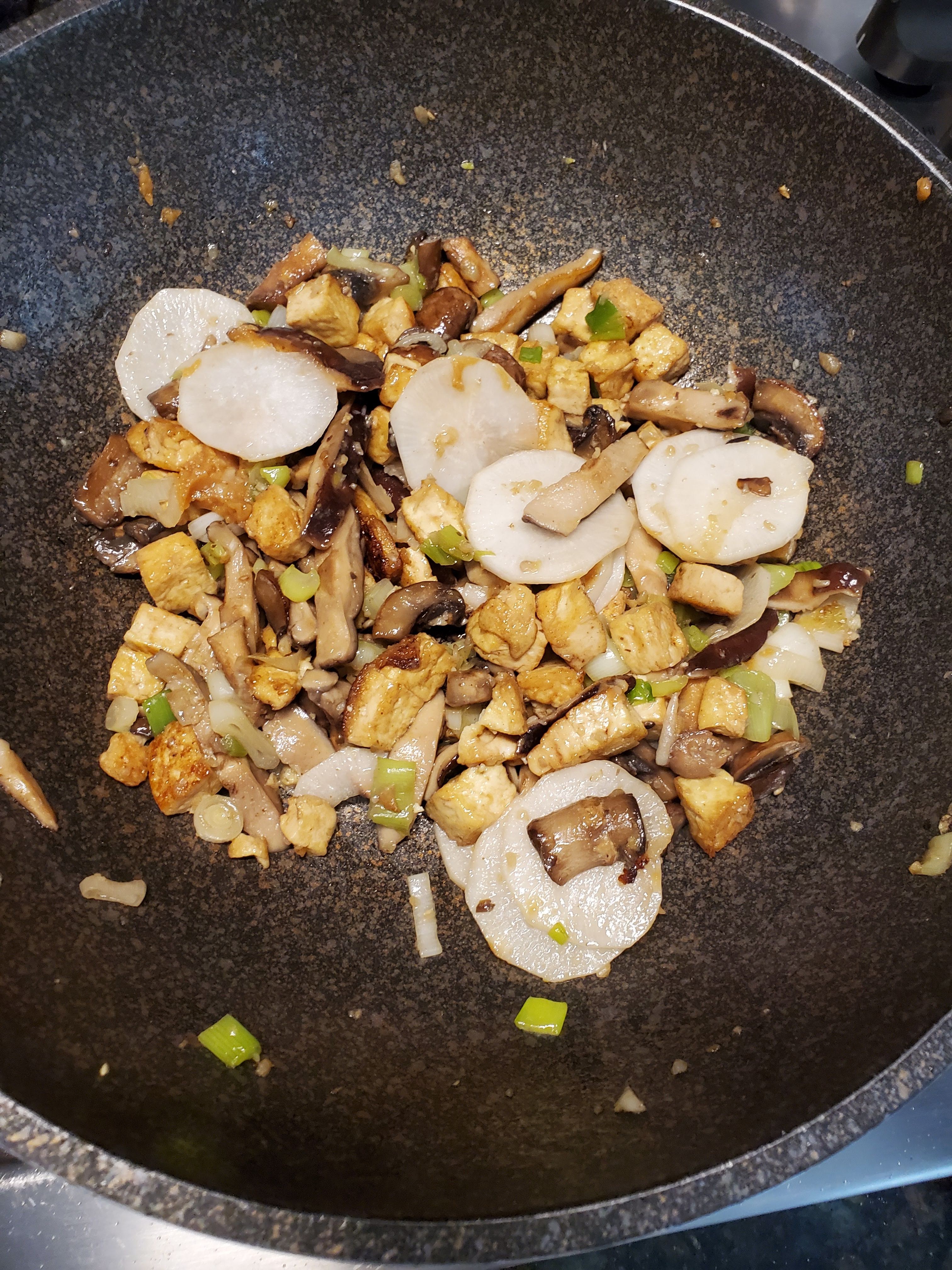
Next comes the kimchi. An older batch works great, and I used the juice as well. The batch I used here was a little heavy on the ginger, which is why I didn't bother with adding ginger along with the garlic up above. This batch also was a mixed kimchi of napa cabbage, daikon radish, and green onions. So it's a little redundant. The thinly sliced fresh daikon softens as it cooks, while the larger chunks of pickled daikon retain firmness and sourness. Similarly, the thinly sliced white part of the fresh scallion contrasts the bigger chunks of pickled scallion. It's almost like 4 different vegetables instead of just 2.
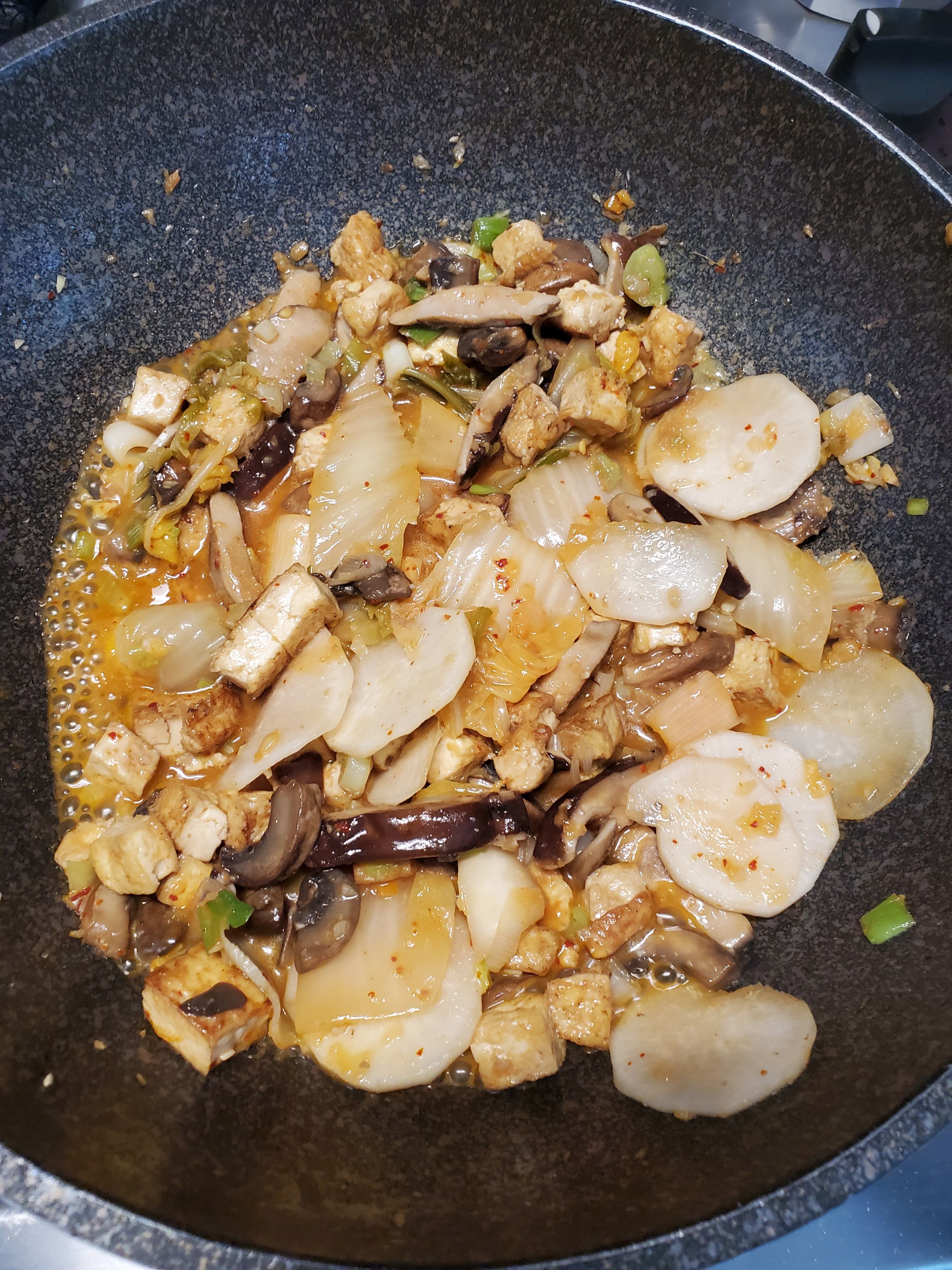
As the kimchi cooks, the cabbage becomes slightly translucent. Here, I add some water to supplement the kimchi juice. I'm a big fan of miso so I put in a hefty spoonful as well. Gochujang is sort of like a mix of miso and Korean chili, so that works as well.
This is also when I put in the soft tofu (soon dubu). It comes in a tube so break it up into smaller chunks and simmer with the liquid.
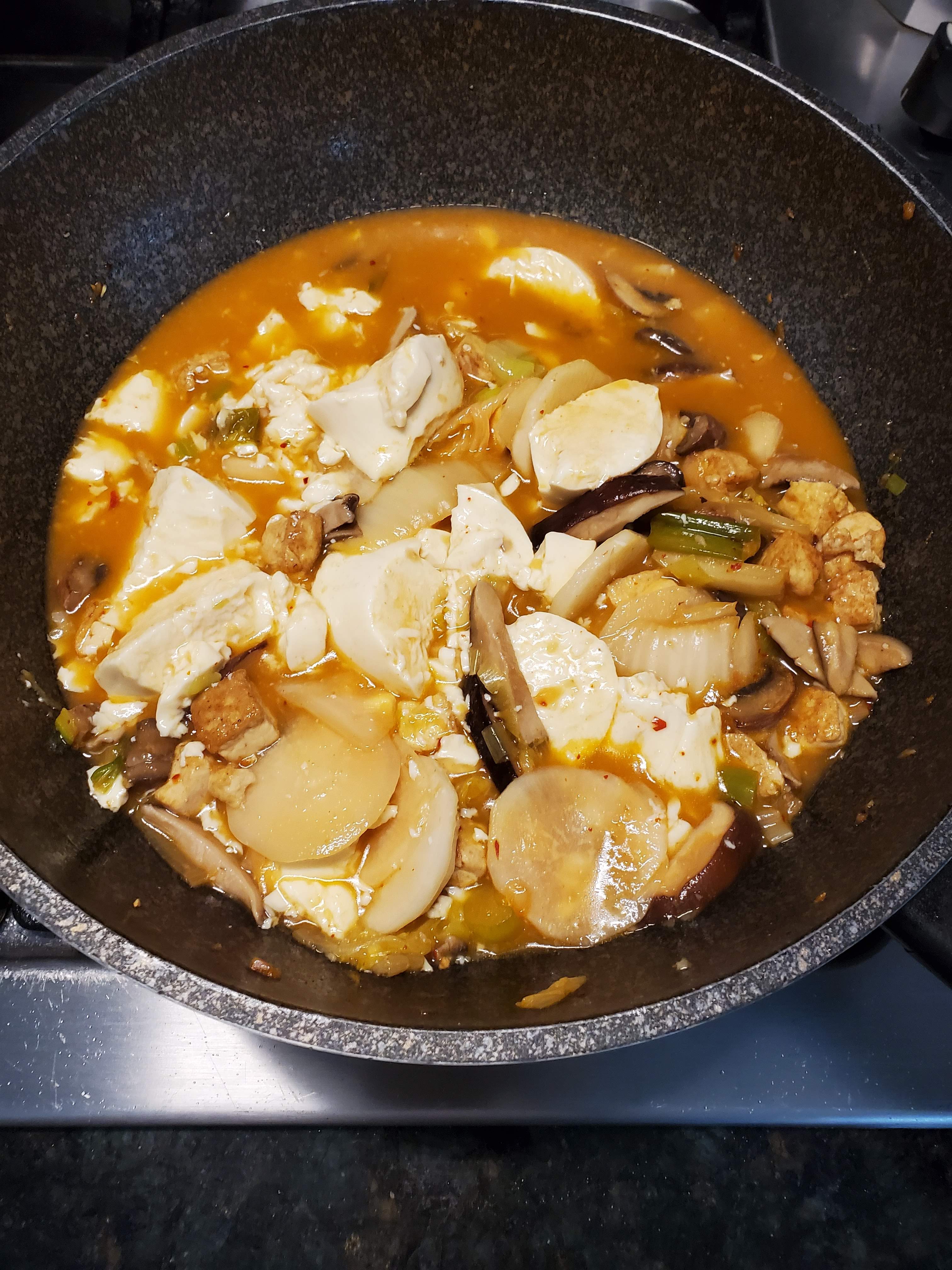
Now the fun part. Remember the chili paste? Dump that into the pot. Now the stew has a gorgeous color. Stir it up and cover, letting it boil.
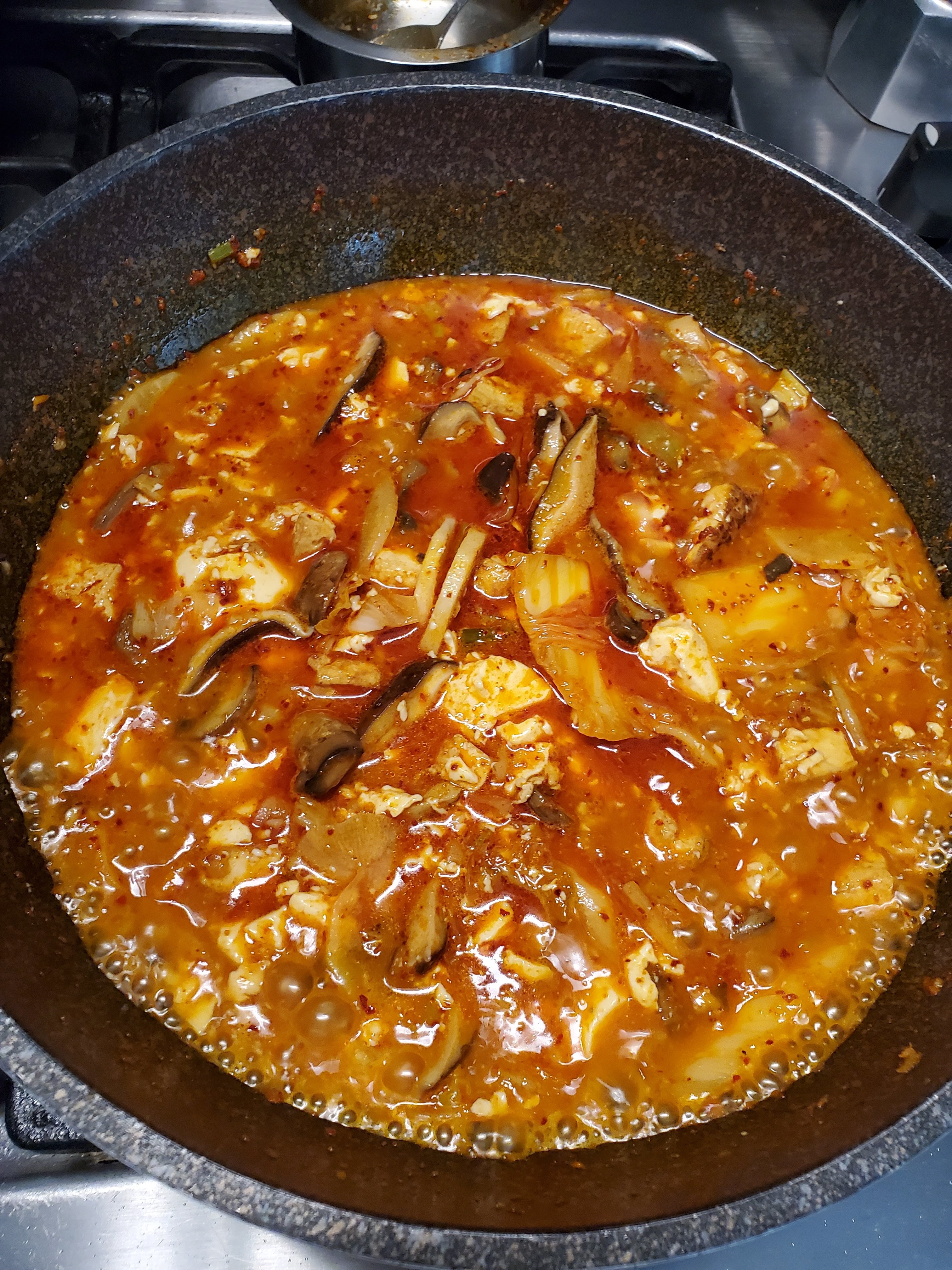
Finally, I added the green part of the scallions along with a pack of enoki mushrooms. These cook pretty quickly so they go at the end.
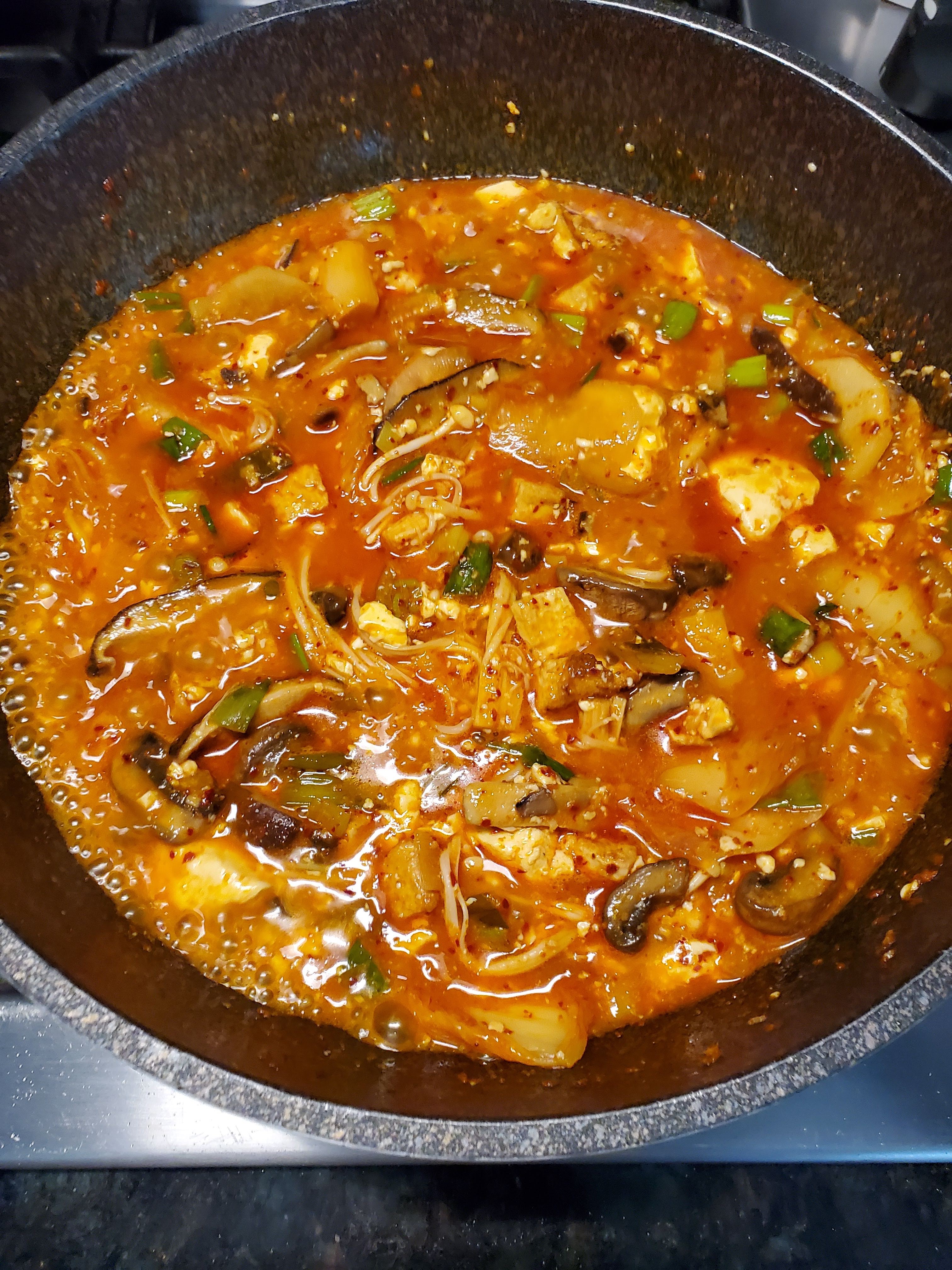
Bada bing bada boom! Custom jjigae using 2 varieties of tofu, 3 varieties of mushrooms, and both fresh and kimchi vegetables. Traditionally eaten with rice, I used wheat noodles instead. It tastes phenomenal, possibly the best dish I've ever made, certainly the best first attempt. Plus it's entirely vegan. Bonus points!
Now, the fundamentals of this dish are so simple, you can even go with a simpler (even lazy) method. You just take some meaty ingredients, stir fry them with ginger and garlic, add kimchi, stir fry together, add water, add seasonings (e.g., chili powder, soy, miso), and boil. Crack an egg in there--I think this works better if your cooking vessel is stone or ceramic rather than metal due to better heat retention. Serve it hot with rice or noodle. Enjoy!