Kimchi
As I've said before, I generally don't follow recipes. It's more accurate to call this a template. Every iteration of my kimchi is based on this template, with some variation depending on the ingredients that I have on hand at the time.
Kimchi is much the same. Its preparation is very forgiving and flexible. It is a spicy vegetable fermentation from Korea. Versatile, it can be eaten raw as a side dish (banchan), or cooked into foods like fried rice and stew (jjigae). It can be made with whatever vegetables are on hand at a given season. It just follows a generic template.
My template for kimchi is a vegetarian variant. I've made it only twice so far, and it has been very successful each time.
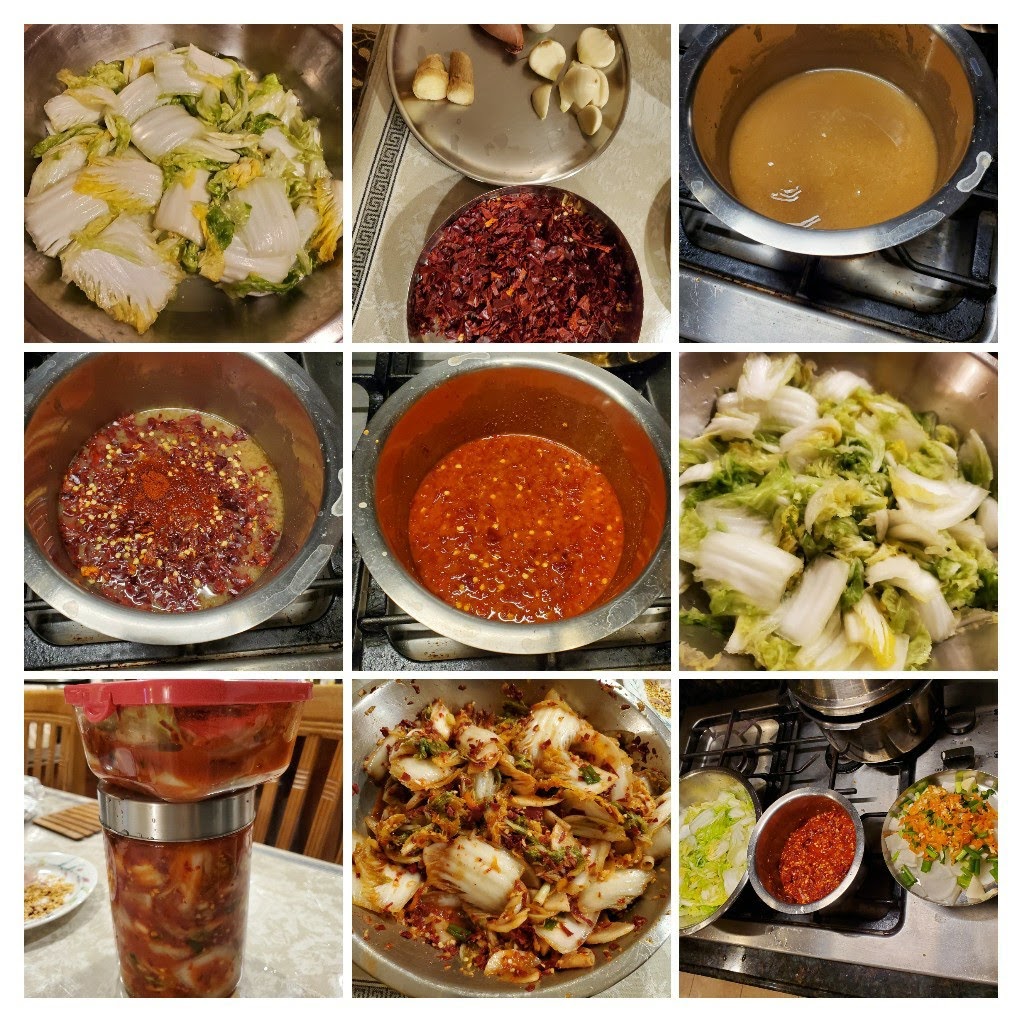
When I think of kimchi, I usually think of napa cabbage kimchi. So I usually start with a napa cabbage when I make kimchi. Wash the cabbage and cut across the z-axis twice to make 4 long pieces. Then cut through the x-y plane to yield 4 pieces, making a total of 16 chunks. The chunks will fall apart as the leafy layers have nothing to bind them together. This is fine. Throw all the cabbage into a large bowl. Mix 4 teaspoons of salt with 1 cup of room temperature water until fully dissolved. Pour the brine over the cabbage and mix by hand for a few minutes until every piece of cabbage has a moist, salty surface. Repeat mixing every 30 minutes for the next 2 hours. Soon, the volume of cabbage will shrink as the salt will draw out much of the cabbage's internal moisture. Notice the leaves wilt.
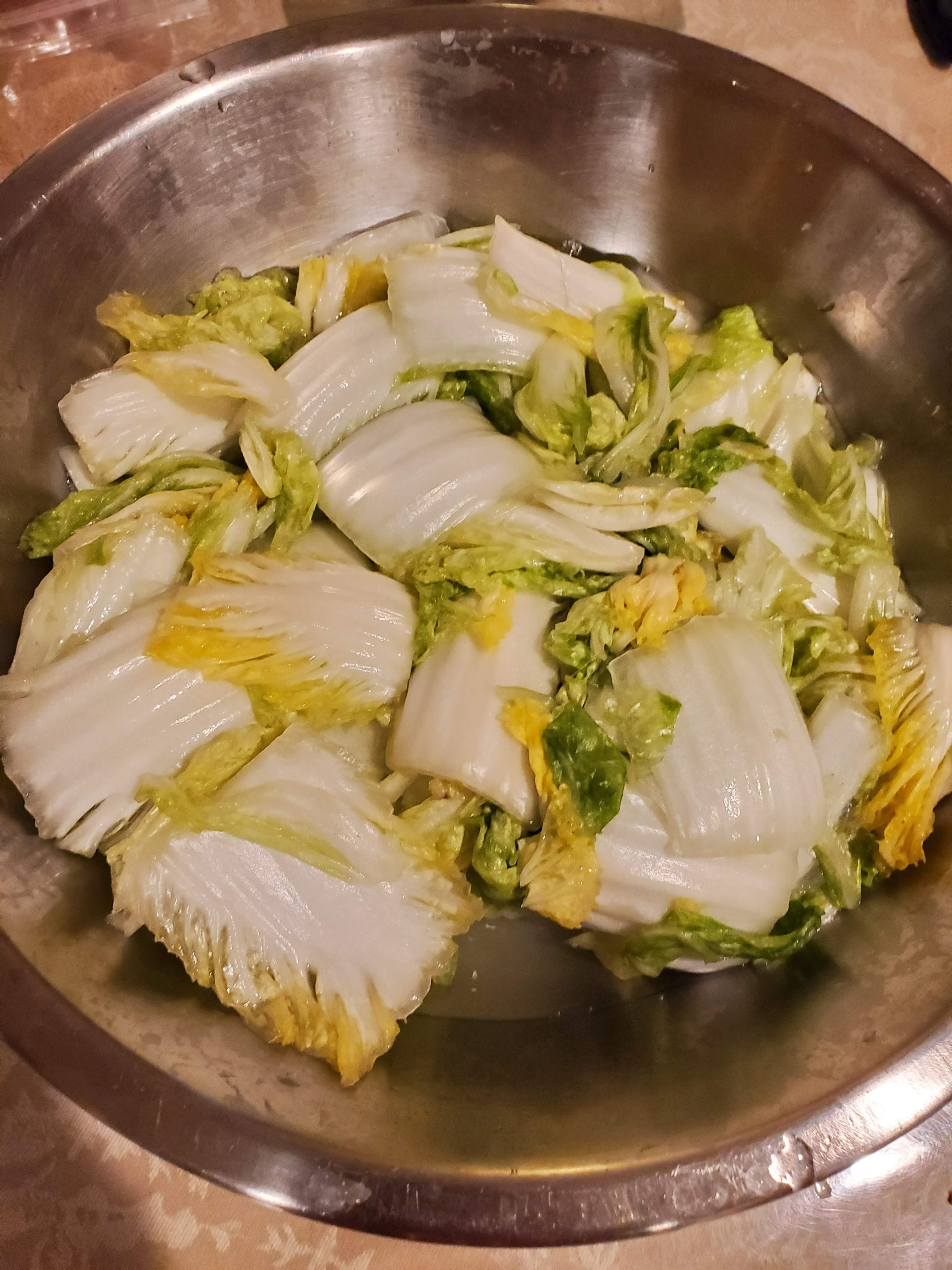
While that's happening, prepare the pickling solution. Traditionally, Koreans use fish sauce and/or shrimp paste. Since I live with vegetarians and have none of those ingredients, I have to try a different approach. This is my vegan fish sauce substitute. I put half a cup of water to boil. I throw in some chopped shiitake mushrooms if I have any. This is really an optional step. Shiitake mushrooms impart nucleotides to enhance the flavor of the ingredients that follow. For this reason, shiitakes commonly pop up in vegan/vegetarian recipes that aim to recreate a meaty flavor such as bone broth. Strain out the mushrooms to leave behind a mushroom tea. Then, add in a hefty spoonful of miso and a few liberal dashes of soy sauce. Stir well and boil, reducing to maybe a quarter-cup of liquid. Soy sauce and miso contain amino acids such as glutamic acid. Add a dash of salt and sugar in there for good measure. Combined, this mixture is a decent vegan "fish" sauce. While it may not have a funky fishy odor, it has all the important taste molecules.
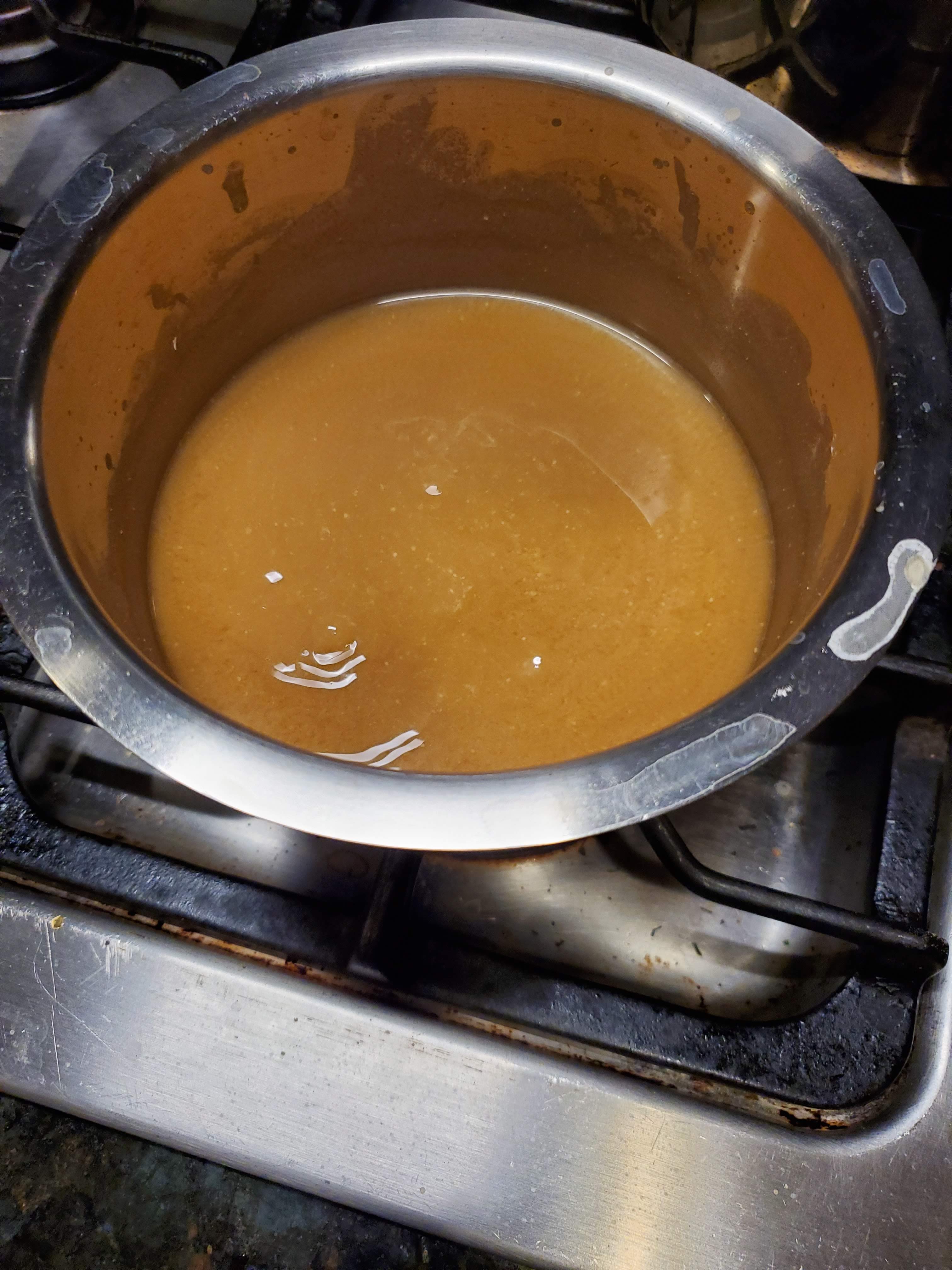
Take some garlic, ginger, and maybe some onions or shallots, and blend them up together. I like to throw in a chili pepper (habanero) to up the spiciness. Dump this into the fish sauce with Korean chili powder (gochujaru). The first time I made kimchi, I did not have these peppers. Instead, I used Mexican guajillo chilis chopped up into fine pieces along with 2 Thai chilis, 2 habaneros, and a tablespoon of cayenne pepper powder. Gochujaru isn't really spicy, so the guajillo chilis made a decent substitute. The other chilis were important for me because I like spicy food. Mix all this up to make the pickling liquid.
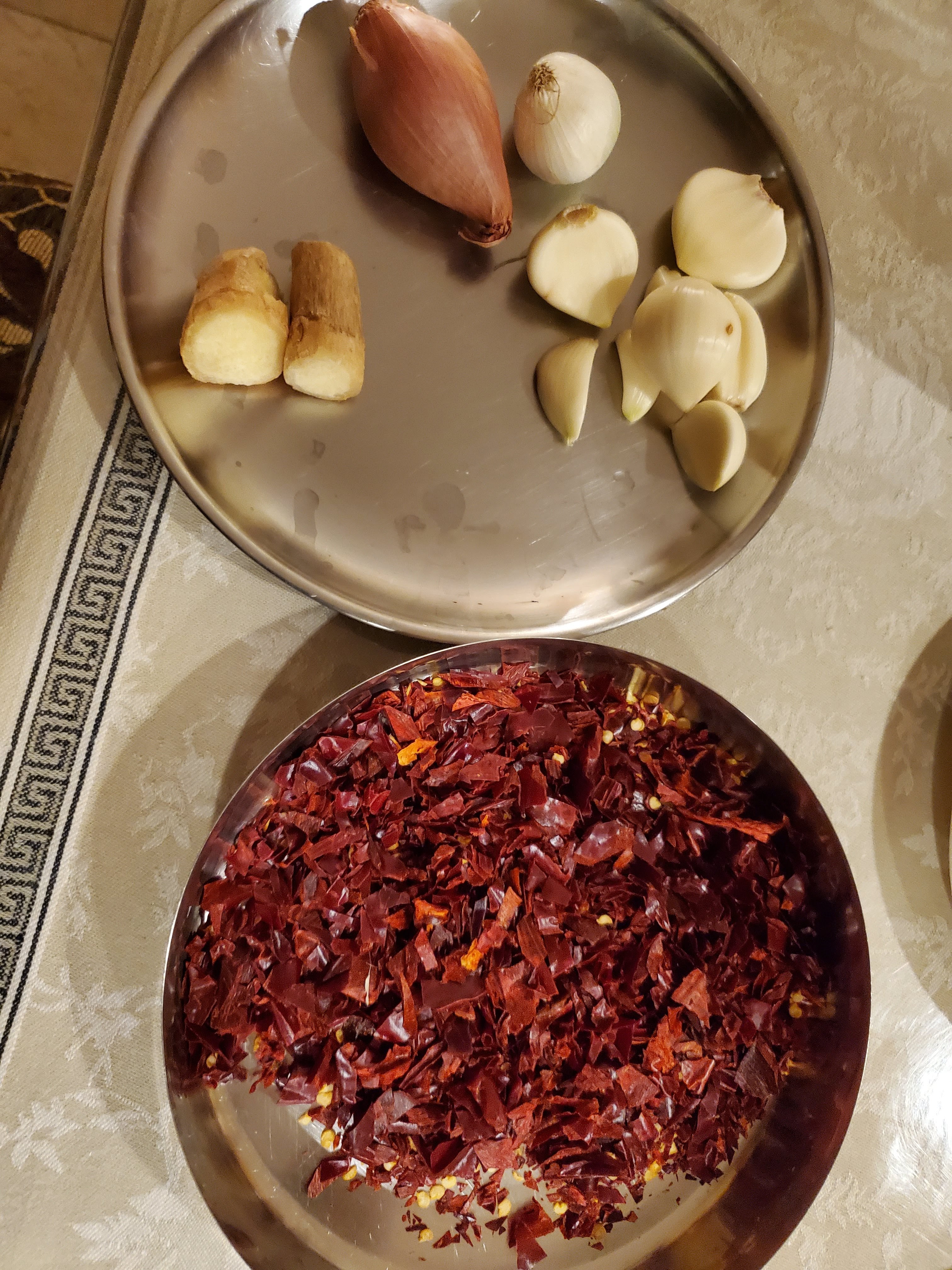
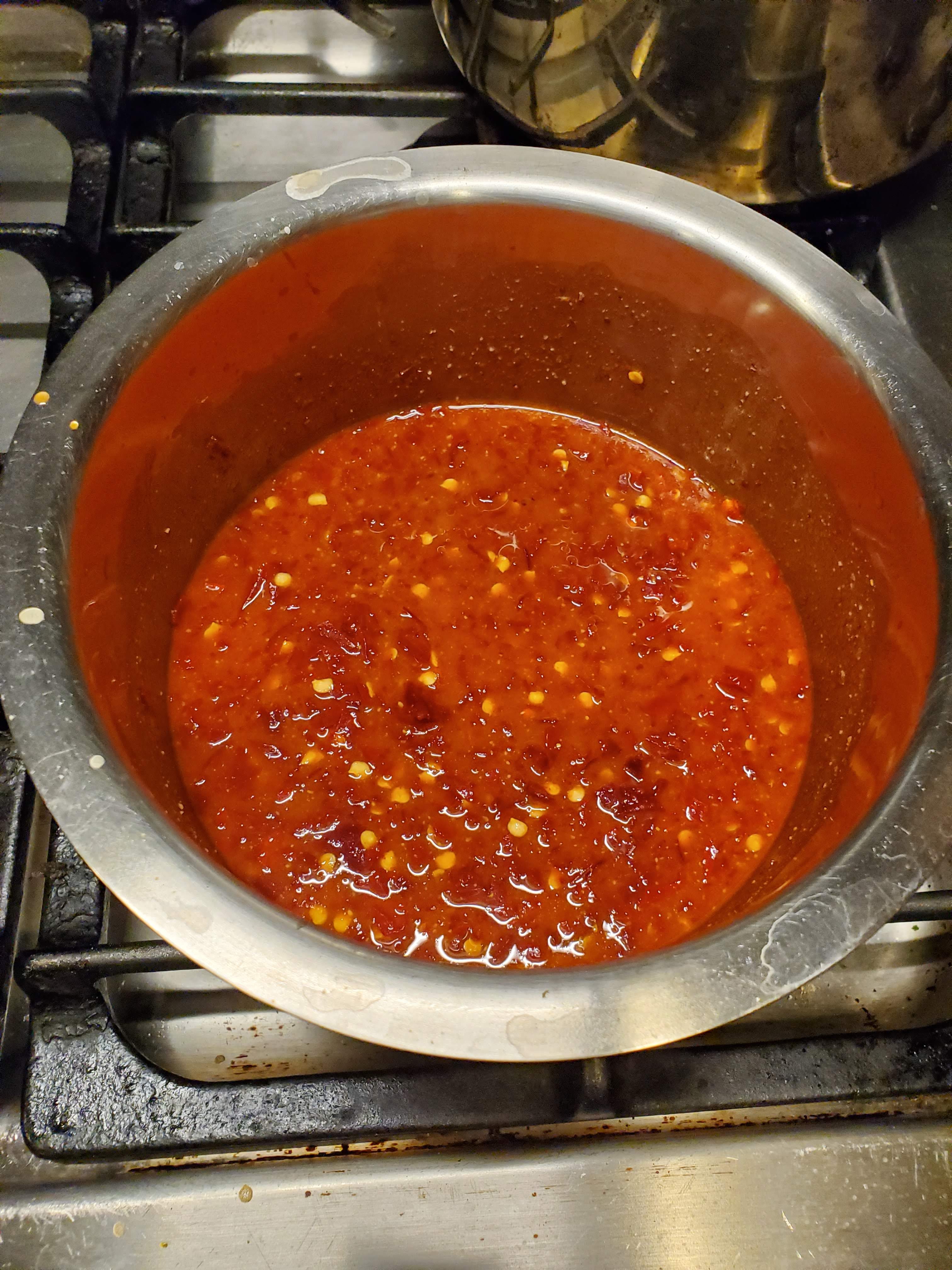
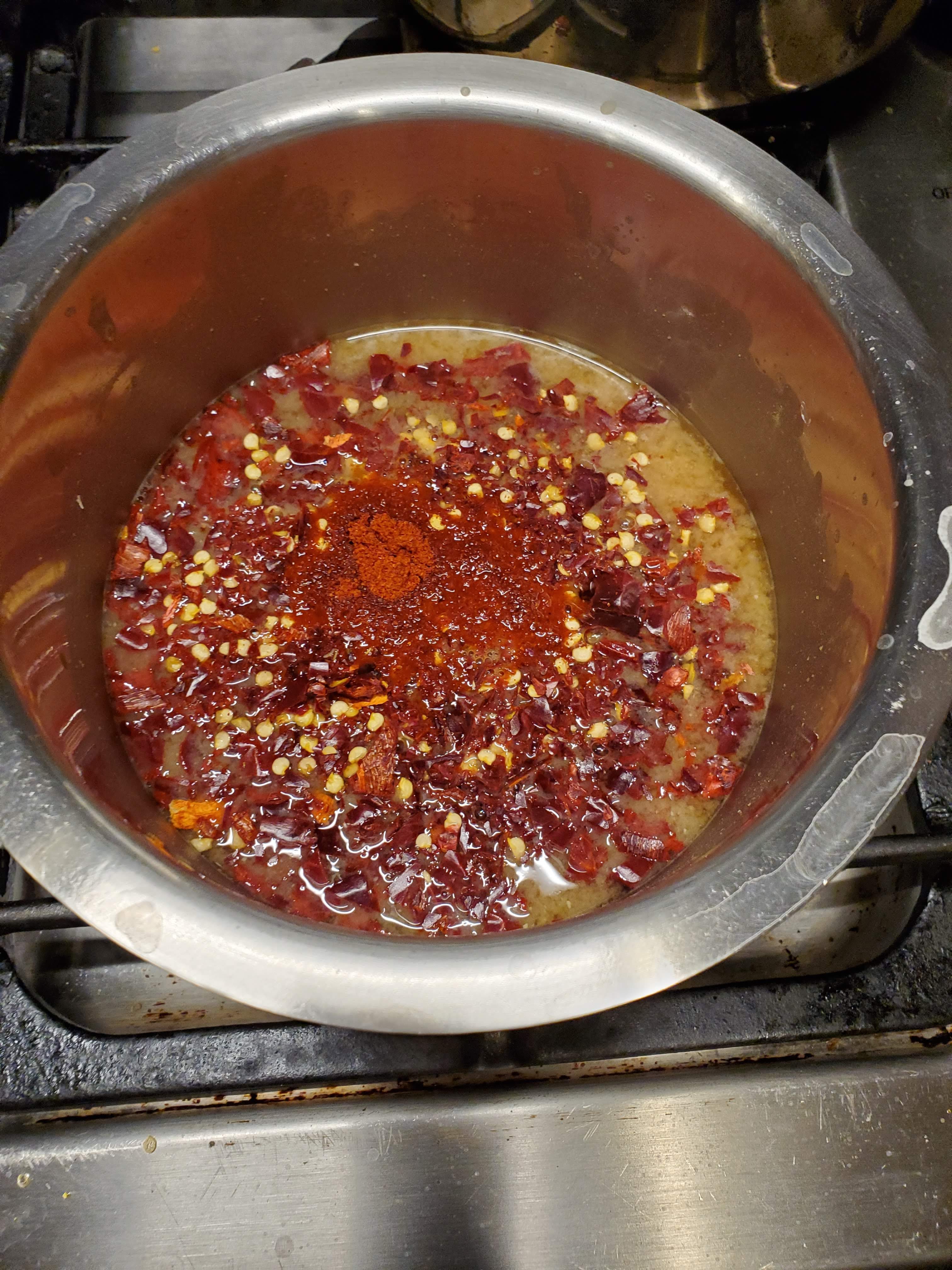
After the cabbage has been brined for 2 hours, drain the brine. Rinse the cabbage 3 times to remove excess salt. Drain as well as you can. Now, upon biting into the cabbage, you should taste a little saltiness.
Toss in any extra ingredients--green onions, daikon radish, carrot--into the cabbage. Then pour in the pickling liquid. Mix by hand to ensure that everything is coated with the chili/fish paste. Then pack everything into a fermentation jar. Push down on the kimchi to compress any air gaps. To prevent mold, there should be no large air gaps and the vegetables should sit below the surface of the liquid.
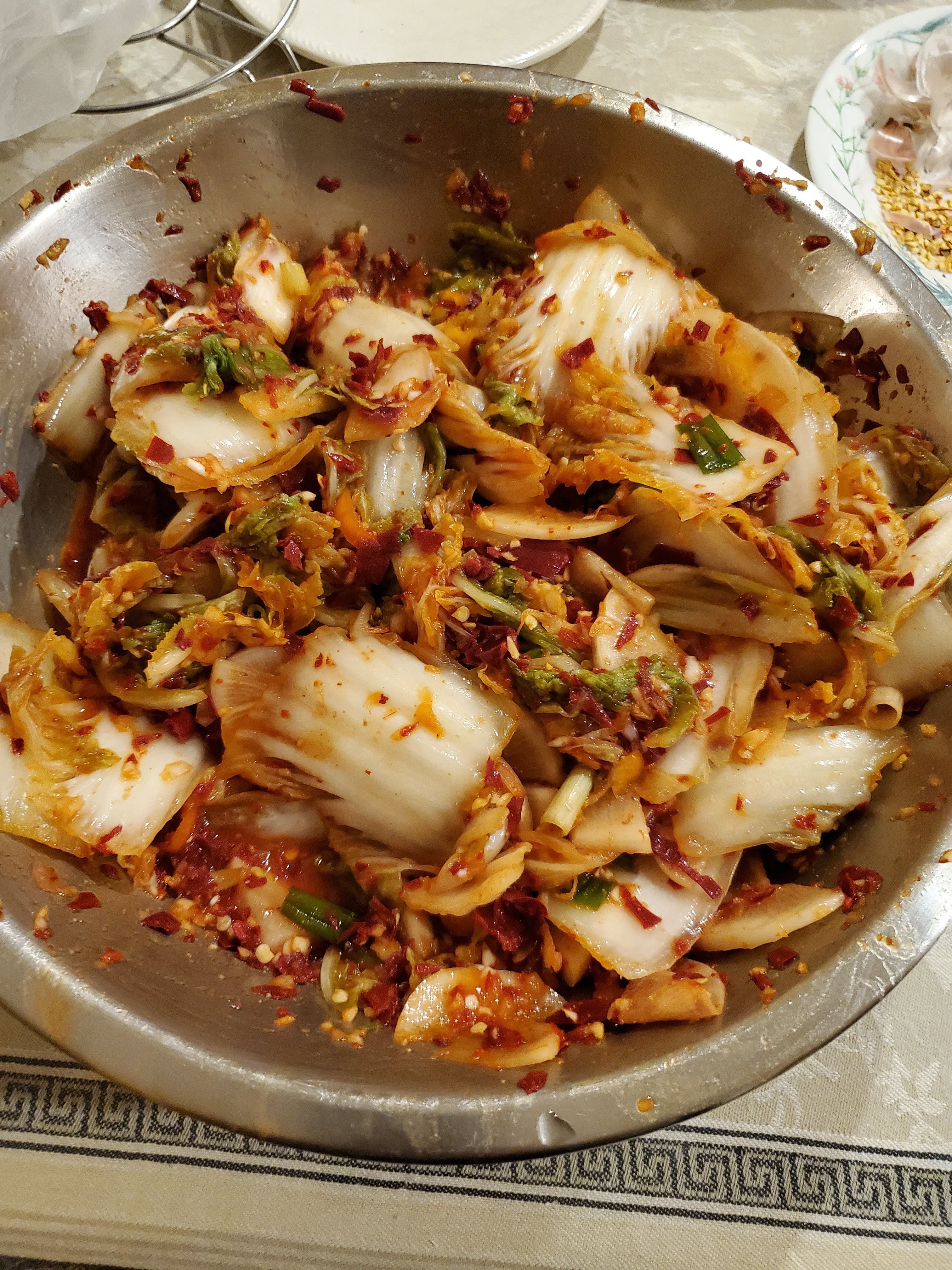
Leave the sealed jar outside to ferment. Feel free to taste every day. After a couple days, the flavor should take on the sharp acidity of lactic acid. That means the good ol' lactobax are doing their job, converting sugars into lactic acid. The acidity will inhibit mold and help preserve the kimchi. Refrigerate when the texture reaches your personal preference. Some people like to ferment quickly to preserve the crunchy texture, while others like to let it ride to get more funky flavor.
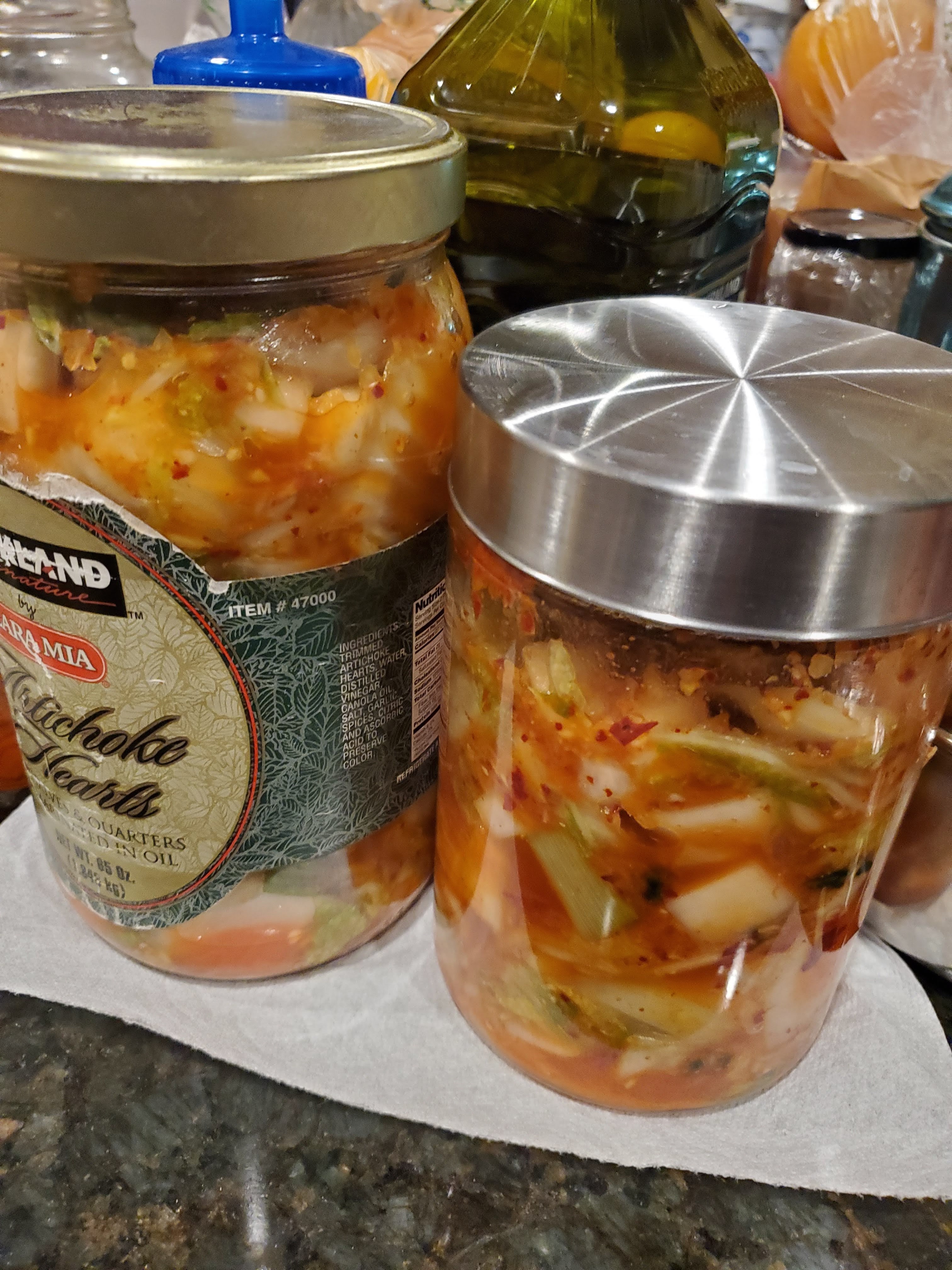
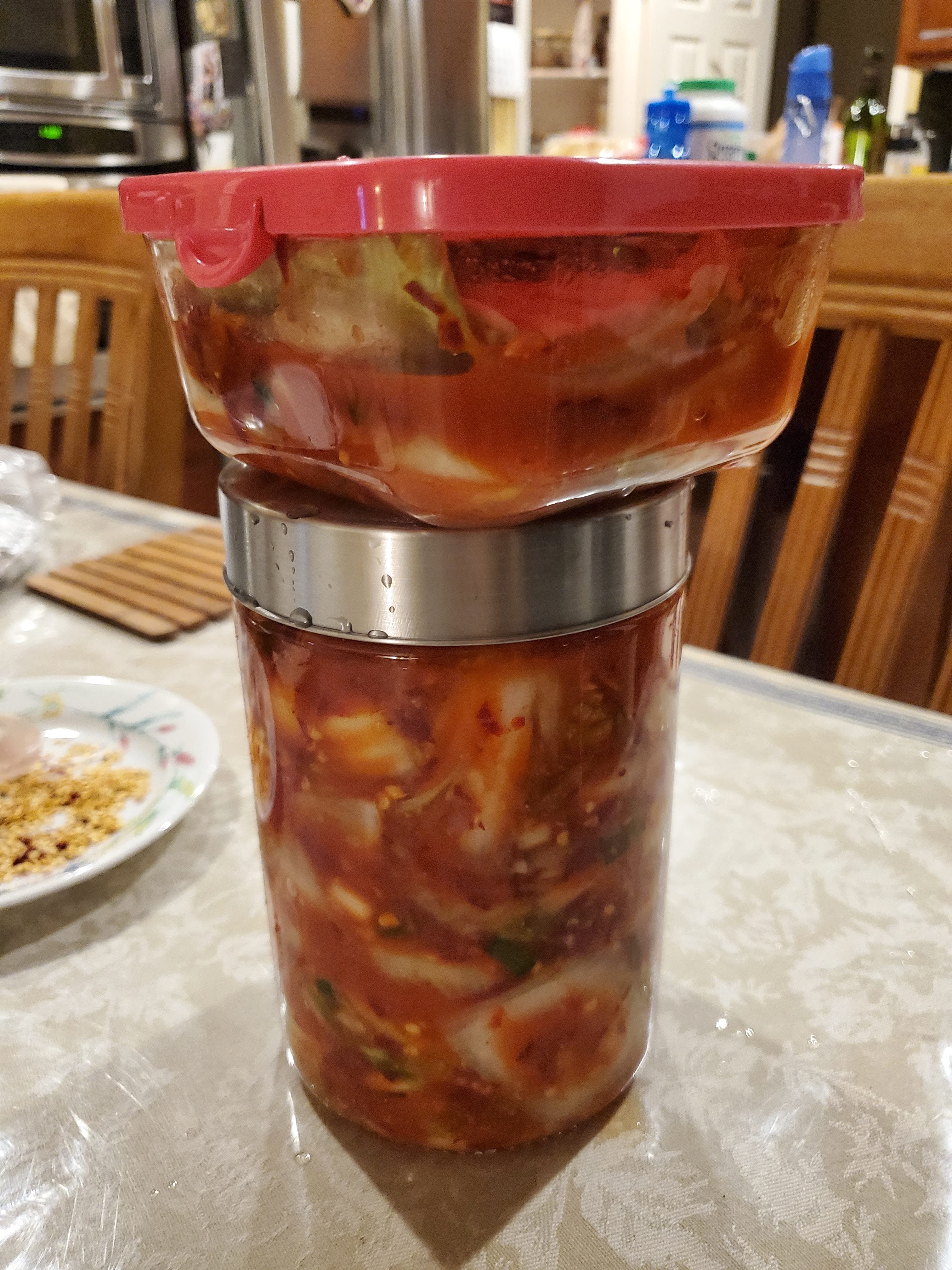
By going a little heavy on the spices and seasonings, my kimchi makes a great mix-in for any Asian style dish I'm cooking. Tofu? Mix in kimchi. Noodles? Mix in kimchi. Fried rice? Mix in kimchi. It saves a lot of time because I don't have to peel and chop either ginger or garlic, and I don't need to add vinegar since the kimchi contains lactic acid.
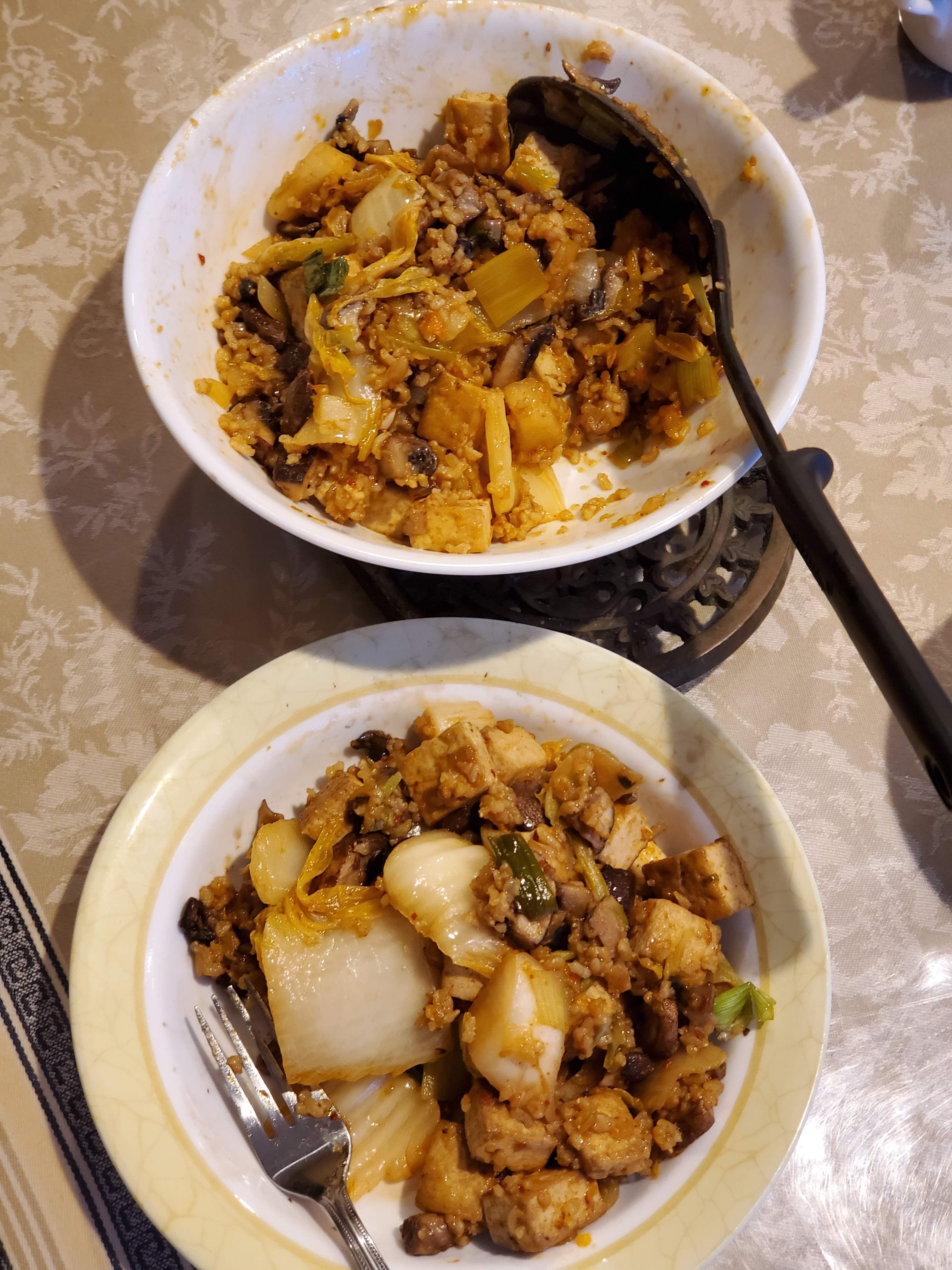
Sure, I can spend $10 fo
r a pound of kimchi at the grocery store. Or I can spend $2 and 2 enjoyable hours making a pound of kimchi at home. Due to the pride from eating and enjoying my own homemade kimchi, I can say that it'll taste better than the store bought stuff.